
Typhoid fever is a serious bacterial infection that affects millions of people globally each year- particularly in regions where access to clean water, proper sanitation, and pest control can be challenging. Caused by the bacterium Salmonella Typhi, typhoid fever spreads via the fecal-oral route: consuming food or drinking water contaminated with sewage or handled by an infected individual.
Understanding how to identify the signs early, get proper medical treatment, and prevent transmission is key to staying safe.
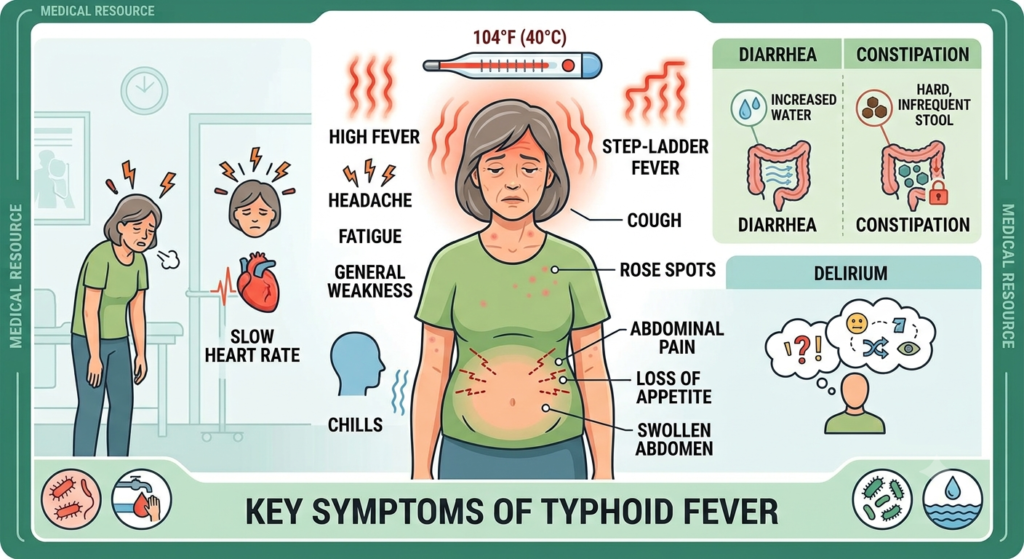
Early Warning Signs and Progression
Symptoms usually appear 1 to 3 weeks after initial exposure. Unlike sudden viral infections, typhoid typically starts gradually and worsens over time if left untreated.
Week 1: Initial Onset
-
Step-Ladder Fever: A persistent fever that climbs incrementally every day, often reaching up to 104°F (40°C).
-
Severe Headaches & Fatigue: Intense bodily exhaustion and dull, continuous head pressure.
-
Gastrointestinal Distress: Abdominal discomfort or swelling, accompanied by either severe constipation or diarrhea.
-
Loss of Appetite: A sudden disinterest in food accompanied by mild nausea.
Weeks 2–3: Severe Progression (If Untreated)
-
Rose Spots: Light pink, spotted skin rashes appearing mainly on the abdomen and lower chest.
-
High Abdominal Swelling: Significant inflammation of the liver and spleen.
-
Neurological Changes: Confusion, severe apathy, or delirium (often referred to as the “typhoid state”).
-
Critical Complications: Severe cases can lead to internal bleeding or intestinal perforation (holes forming in the wall of the small intestine), which require immediate surgical intervention.
How Typhoid Fever Is Treated
Crucial Safety Note: Typhoid fever requires evaluation and prescription medication from a licensed medical professional. Self-medicating or relying exclusively on home remedies is dangerous.
Medical treatment for typhoid fever focuses on targeting the bacteria directly while keeping the body stable during recovery:
-
Consultation: You must consult to a doctor, even if your fever subsides early. Stopping early allows surviving bacteria to multiply and potentially develop dangerous drug resistance.
-
Aggressive Hydration: High fever and gastrointestinal symptoms rapidly deplete body fluids. Oral Rehydration Salts (ORS) and clean, boiled water help restore electrolyte balance and prevent severe dehydration.
-
Nutritional Support & Rest: Digestible, energy-dense meals (cooked vegetables, clear broths, and porridge) support immune recovery while minimizing strain on the inflamed digestive tract.
How Typhoid Bacteria Enter Your Home
Understanding how Salmonella Typhi infiltrates a household is the first step in building a strong line of defense. Because typhoid is primarily transmitted through the fecal-oral route, the bacteria rely on specific everyday pathways to enter your living space:
1. Contaminated Tap or Storage Water
Water is the primary vector for typhoid bacteria. If municipal water lines suffer from pipe breaks or cross-contamination with sewage lines, the bacteria can enter your home directly through your taps. Additionally, storing water in unwashed overhead tanks or open household containers creates prime conditions for lingering contamination.
2. Contaminated Fresh Produce and Street Foods
Raw fruits, leafy greens, and vegetables harvested from fields irrigated with untreated wastewater—or washed with contaminated water at local markets—can carry the bacteria straight into your kitchen. Unpackaged street foods handled by individuals without clean water access are also common culprits.
3. Asymptomatic Household Members or Visitors
A person doesn’t need to look or feel sick to bring typhoid into your home. Asymptomatic carriers—people who have recovered from typhoid fever or carry the bacteria in their gallbladder without showing symptoms—can continuously shed Salmonella Typhi in their stool. If an infected individual or visitor prepares food or touches shared surfaces without thoroughly washing their hands, the bacteria spread rapidly across the house.
4. Mechanical Disease Vectors (Pests)
Pests like houseflies and cockroaches act as living transportation networks for bacteria. When flies feed on exposed sewage, garbage, or contaminated waste outdoors, microscopic amounts of Salmonella Typhi stick to their legs and bodies. When they land on uncovered kitchen countertops, open food platters, or clean dining utensils, they transfer the pathogen instantly.