
Bed bugs are among the most persistent and elusive household pests. Because these tiny, nocturnal insects hide inside microscopic cracks during the day and emerge only to feed while you sleep, an infestation can easily grow unnoticed for weeks.
Learning how to spot the early signs of bed bugs before a minor issue turns into a major infestation is essential for protecting your living space and peace of mind.
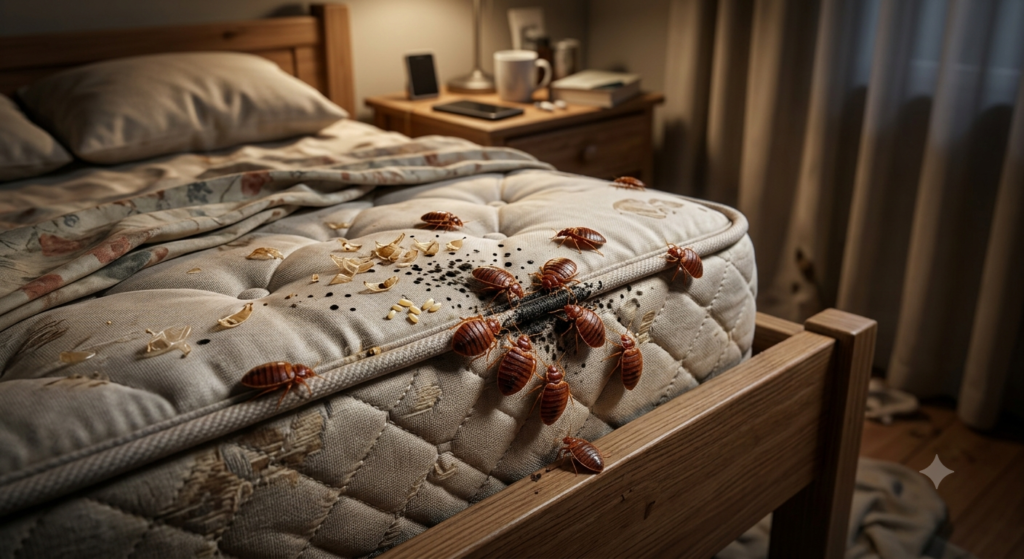
Early Physical Indicators of Bed Bugs
You don’t always need to see a live insect to confirm their presence. In the early stages of an infestation, bed bugs leave distinct physical clues on bedding, furniture, and surrounding surfaces:
1. Fecal Smears (Dark Black Spots)
-
Bed bug droppings look like tiny, dark dots—resembling specks from a fine-tip permanent marker or ground black pepper.
-
These marks often bleed into the fabric of mattresses, box springs, bed frames, and headboard seams.
2. Blood Stains on Sheets
-
Unexplained rust-colored or bright red spots on pillowcases, bed sheets, or nightwear usually occur when engorged bugs are accidentally crushed during sleep or when bite marks leak slightly.
3. Shed Skins (Exoskeletons)
-
As bed bug nymphs grow through five developmental stages, they shed their outer skins. Look for translucent, pale-yellow shell casings near mattress tufts, seams, or behind headboards.
4. Eggs and Eggshells
-
Tiny, pearl-white eggs measuring about 1 mm (roughly the size of a grain of salt) are often deposited in clusters inside tight crevices.
5. Musty, Sweet Odor
-
Severe or maturing infestations emit a distinct, sweet, and musty scent produced by the pests’ alarm pheromones.
Identifying Bed Bug Bites
For many people, waking up with unexplained itchy marks is the first clue. However, bite reactions vary significantly from person to person.
-
The “Breakfast, Lunch, and Dinner” Pattern: Bed bug bites typically appear in small lines, rows, or zig-zag clusters on exposed skin (such as the neck, hands, arms, and legs).
-
Painless at First: Bed bugs inject an anesthetic and anticoagulant while feeding, so you won’t feel the bite happening.
-
Delayed Reaction: Redness, mild swelling, and intense itching may take anywhere from a few hours to several days to develop.
Home Care Tip for Bites: Wash the affected skin gently with soap and water. Apply over-the-counter hydrocortisone cream or calamine lotion to ease itching, and avoid scratching to prevent secondary skin infections.
Where Bed Bugs Hide First
In early infestations, bed bugs stay as close to their human hosts as possible. Always inspect these key hotspots:
-
Mattress Seams & Tags: Check along the piped edges, tufts, and care labels.
-
Box Springs & Bed Frames: Inspect the wooden slats, metal joints, and corner guards.
-
Headboards & Wall Crevices: Examine the space directly behind wall-mounted headboards, picture frames, and baseboards.
-
Soft Furniture: Look between sofa cushions and along zipper seams of armchairs located near sleeping quarters.
How to Respond to an Early Infestation
If you spot any of these warning signs, take immediate action to contain the spread:
-
Isolate & Wash: Wash all affected bedding, clothing, and curtains in hot water ($60^\circ\text{C}$ or higher) and dry them on high heat for at least 30 minutes.
-
Vacuum Thoroughly: Vacuum mattress seams, bed frames, baseboards, and carpets, then immediately seal and dispose of the vacuum bag outdoors.
-
Avoid Moving Items: Do not move infested furniture or bedding to other rooms, as this spreads the insects across your home.
-
Enlist Professional Help: DIY sprays often fail against eggs and deep-crack harborages. Integrated pest management—including professional heat treatments or specialized treatments—is the most reliable solution.