
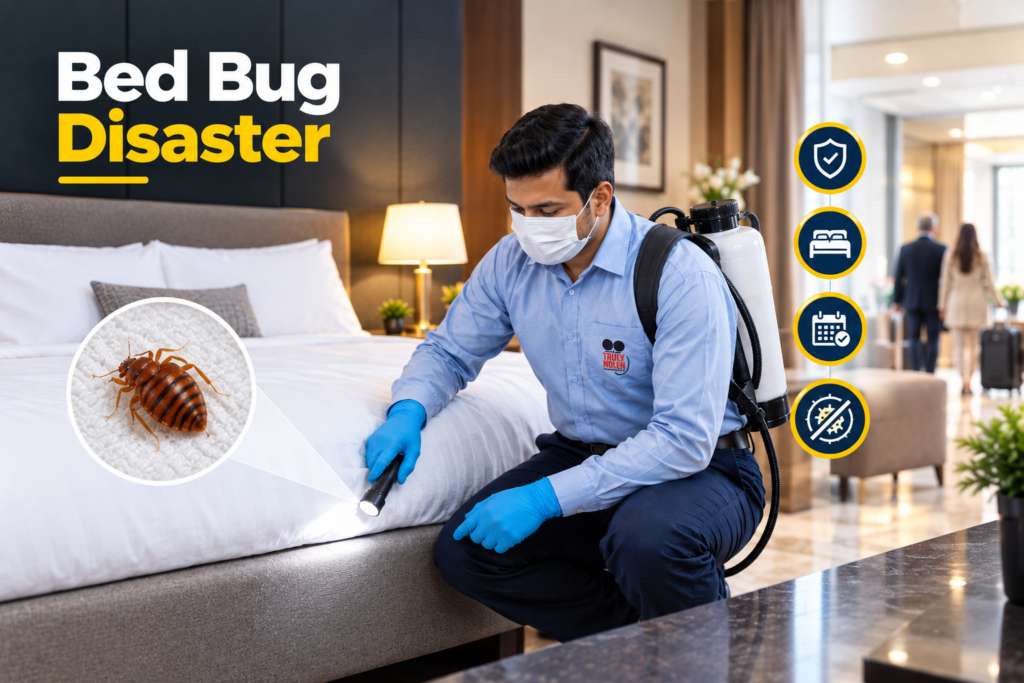
Bed Bug Disaster Response: Protecting Hospitality Brand Reputation & Room Availability Ahead of the Festive Rush
As the festive season approaches, hotels, resorts, and hospitality properties across India prepare for peak occupancy. Booking calendars fill up months in advance, and housekeeping teams work in overdrive to turn around rooms quickly.
Yet, in the high-stakes hospitality sector, a single online review mentioning a bed bug sighting can dismantle months of marketing efforts, crash your OTA ratings, and lead to devastating room cancellations during your most profitable window.
When an infestation strikes during peak season, standard chemical treatments—which require lengthy drying times, lingering chemical odors, and days of room downtime—are simply not an option. You need a Bed Bug Disaster Response built for speed, complete discretion, and zero inventory loss. Partnering with industry leaders in Commercial Pest Control Services ensures your property remains pristine and guest-ready when it matters most.
1. The High Cost of Festive Season Bed Bug Incidents
During peak festive travel, a bed bug outbreak isn’t just a maintenance issue; it is an acute business crisis. Consider what is at stake:
- The Revenue Impact: Taking a high-tariff suite or deluxe room offline for a standard 3-day chemical treatment during peak season results in immediate lost revenue.
- The Reputation Fallout: Guests do not complain quietly. A photograph shared on social media or a scathing review on TripAdvisor can cost you hundreds of future bookings overnight.
- Operational Bottlenecks: Traditional liquid or aerosol sprays often fail to penetrate deep mattress seams, electrical outlets, and headboard crevices, causing infestations to bounce back and trigger repeat complaints.
2. The Solution: High-Speed Thermal Heat Treatments
To protect room availability and brand equity, forward-thinking hoteliers are abandoning slow chemical sprays in favor of advanced thermal remediation (heat treatment).
Unlike traditional methods, professional heat treatments offer distinct advantages tailored for luxury and commercial hospitality environments:
- 100% Eradication in a Single Pass: Heat penetrates deep into furniture, box springs, mattresses, wall voids, and luggage racks, killing bed bugs and their eggs at all life stages simultaneously.
- Rapid Turnaround Time: A complete thermal treatment typically takes only a few hours. Your housekeeping team can re-make the bed and return the room to inventory the very same day, preserving vital room availability.
- Zero Chemical Residue & Odor: Because heat relies entirely on controlled thermal energy, there are no harsh chemical residues, staining, or lingering chemical smells. Guests can safely occupy the room immediately following treatment without any health or sensory concerns.
- Absolute Discretion: Professional pest management teams operate discreetly—utilizing unmarked vehicles and portable equipment—ensuring that guests remain completely unaware of the intervention.
3. A 4-Step Festive Readiness & Response Protocol
To bulletproof your property against bed bug disruptions as festive crowds arrive, implement this proactive framework:
Step 1: Pre-Festive Staff Vigilance Training
Housekeeping and front-desk staff are your first line of defense. Train room attendants to spot early indicators during daily turn-down services—such as tiny dark fecal spots on mattress piping, shed exoskeletons, or tiny white eggs in crevices.
Step 2: Implement Targeted Bed Bugs Treatment Protocols
Establish a rapid-response service level agreement (SLA) with your pest control partner. The moment a guest reports an issue or an attendant flags a suspect room, the room must be immediately locked out of inventory, sealed, and scheduled for emergency thermal remediation.
Step 3: Safeguard Luggage Storage and Staff Lockers
Bed bugs are frequently hitchhikers introduced by incoming travelers or staff. Protect high-risk common areas—such as luggage holding rooms and employee locker areas—with regular preventive inspections and discrete monitoring systems.
Step 4: Proactive Housekeeping Integration
Incorporate regular mattress encasements, high-temperature steam sanitation for upholstery, and routine inspection schedules into your standard operating procedures (SOPs) across all floors.
4. Key Metrics for Hospitality Pest Management
Evaluate your property’s biological readiness heading into the festive rush using these key indicators:
- Room Downtime: Time elapsed from initial bug detection to complete thermal clearance and room release.
- First-Time Eradication Rate: Percentage of treated rooms requiring zero secondary follow-up treatments.
- Guest Complaint Ratio: Number of pest-related feedback logs during peak occupancy periods.
- Preventive Audit Compliance: Frequency of scheduled deep-inspections across high-traffic guest rooms.
The Bottom Line
Your guests come looking for festive celebration, luxury, and comfort—not uninvited pests. Protecting your brand reputation requires moving away from slow, reactive spray methods and adopting rapid, non-toxic thermal disaster response protocols.
Ensure your hotel maintains flawless ratings and maximum room revenue throughout the peak holiday season. Contact Us Today to consult with Truly Nolen India and establish a priority emergency response plan for your property.
Frequently Asked Questions
How can hotels handle a bed bug outbreak during peak festive season without losing room revenue?
During peak festive occupancy, hotels can prevent costly room downtime by utilizing high-speed thermal heat treatments instead of traditional chemical sprays. Professional heat remediation kills bed bugs and their eggs at all life stages in a single pass—taking only a few hours. This allows housekeeping to return treated rooms to inventory the very same day with zero chemical residue or odor, protecting both revenue and OTA ratings.
Why are traditional chemical sprays ineffective for hotel bed bug infestations?
Traditional liquid or aerosol chemical sprays often fail in commercial hospitality environments because they cannot penetrate deep mattress seams, electrical outlets, and headboard crevices. Furthermore, chemical treatments require lengthy drying times, leave lingering odors, and demand days of room downtime—leading to severe revenue loss and operational bottlenecks during peak travel seasons.
What are the benefits of thermal heat treatments over chemical pest control for luxury hotels?
Thermal heat treatments offer four key advantages for hospitality properties:
100% Eradication in a Single Pass: Destroys bugs and eggs simultaneously across all life stages.
Rapid Turnaround: Restores rooms to inventory on the same day.
Zero Chemical Residue/Odor: Guests can safely re-occupy rooms immediately with no chemical smells or staining.
Absolute Discretion: Utilizes unmarked vehicles and portable equipment to protect guest privacy and brand reputation.
What is a 4-step bed bug readiness protocol for hospitality brands?
To bulletproof a property against bed bug disruptions ahead of peak seasons, hoteliers should implement a 4-step framework:
Pre-Festive Staff Training: Train housekeeping to spot early warning signs like fecal spots or shed exoskeletons during turn-down service.
Rapid-Response SLAs: Establish emergency service agreements with pest control partners for immediate thermal remediation and room lockouts.
Common Area Protection: Safeguard high-risk zones like luggage storage and staff locker rooms with regular monitoring.
Proactive Housekeeping SOPs: Integrate mattress encasements, high-temperature steam sanitation, and routine floor inspections.
What key metrics should hoteliers track to evaluate commercial pest management?
Hospitality properties should evaluate their biological readiness by tracking four primary metrics:
Room Downtime: The total elapsed time from bug detection to complete thermal clearance and room release.
First-Time Eradication Rate: The percentage of treated rooms requiring zero secondary follow-up treatments.
Guest Complaint Ratio: The number of pest-related feedback logs during peak occupancy periods.
Preventive Audit Compliance: The frequency of scheduled deep inspections across high-traffic guest rooms.